Exclusive access to private-company shares has become an attractive investment proposition. But behind some pre-IPO opportunities are nonexistent shares, undisclosed markups, and investment structures that do not deliver what investors were promised.
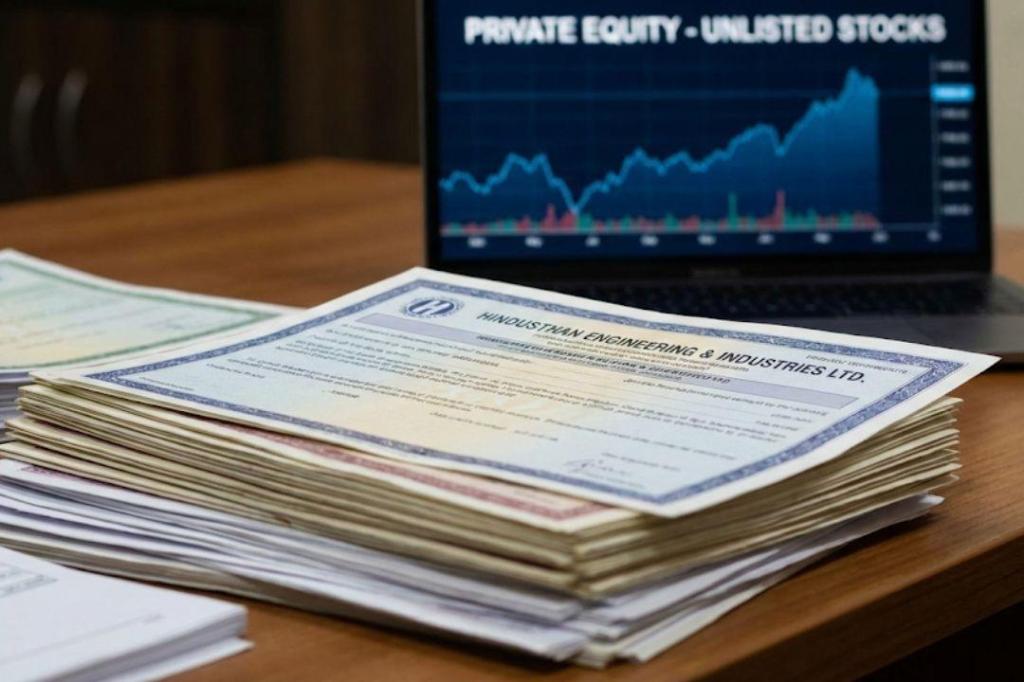
Imagine being offered an opportunity to purchase shares in a private technology company before its initial public offering.
The company is recognizable. The anticipated IPO is generating excitement. The person making the offer claims to have institutional connections and access to a limited allocation.
You are told that the opportunity is not available to the general public.
For investors seeking early access to high-growth companies, the proposition can be compelling.
But there is a critical question: Who actually owns the shares you are being offered?
The U.S. Securities and Exchange Commission has repeatedly brought enforcement actions involving fraudulent pre-IPO investment schemes. These cases demonstrate that the problem extends beyond fake companies. Investors can also be deceived about actual share ownership, fund structures, investment pricing, and the use of their money.
The business of selling access
Pre-IPO investing involves acquiring an interest in a privately held company before it becomes publicly traded.
Investors may participate directly or through private investment funds and special-purpose vehicles.
These structures are not inherently fraudulent. However, they introduce additional layers between the investor and the underlying shares.
That distance creates opportunities for misrepresentation.
A promoter might claim to have secured an allocation when no shares have been acquired. Another might establish an investment vehicle that supposedly owns shares but does not. Others may acquire legitimate shares and resell them through affiliated entities at substantial undisclosed markups.
The SEC specifically identifies these practices as potential warning signs of pre-IPO investment fraud.
Real enforcement cases reveal the scale
Several federal enforcement actions illustrate the risks.
StraightPath and Legend
In June 2024, the SEC charged three individuals over alleged pre-IPO investment schemes involving more than $184 million raised through investment vehicles.
The SEC alleged that investors were charged substantial undisclosed markups, averaging approximately 19% to 105% above the prices paid for underlying shares.
The $120 million pre-IPO scheme
In September 2024, the SEC charged three individuals in a separate case involving approximately $120 million raised from more than 900 investors through funds supposedly holding pre-IPO shares.
The $74 million case
In August 2026, the SEC charged a New York resident and three affiliated entities in connection with eleven private funds that allegedly raised more than $74 million from over 800 mostly retail investors.
The SEC alleged that shares acquired through related entities were resold to the funds at marked-up prices.
These cases demonstrate that the risks can exist even when the underlying private companies are real.
Three ways investors can be deceived
1. Shares that do not exist
A promoter claims to own or control shares in a private company but cannot demonstrate actual ownership or an enforceable right to acquire them.
2. Investment vehicles that do not deliver
Investors purchase interests in an SPV or private fund believing that it holds specific shares. The fund may not have acquired those shares or may use investor money differently from what was represented.
3. Hidden fees and undisclosed markups
The underlying shares may be genuine, but the investor is not told what the intermediary paid or how much additional compensation is being charged.
The distinction matters. Real securities do not automatically make an investment legitimate.
Why sophisticated investors can be vulnerable
Pre-IPO opportunities appeal to investors who understand the value of early access.
The pitch frequently combines three powerful elements:
- Exclusivity: access to opportunities unavailable to ordinary investors.
- Scarcity: a limited number of shares available for a short period.
- Social credibility: referrals, professional relationships, and purported institutional connections.
A sophisticated presentation can make an investment appear legitimate without independently proving ownership.
The investor may be evaluating the company while failing to investigate the intermediary.
How to protect your investment
Before transferring money for a pre-IPO allocation, investors should independently verify:
- The identity and registration status of the broker, adviser, and promoter.
- The actual legal entity issuing or selling the investment.
- Whether the shares exist and who legally owns them.
- Whether the investment is direct ownership or an interest in an SPV or fund.
- The fund’s governing documents, custody arrangements, and ownership records.
- All fees, commissions, related-party transactions, and markups.
- Restrictions on transferring or selling the shares.
- The destination and control of the investor’s funds.
Use FINRA BrokerCheck and SEC Investment Adviser Public Disclosure resources to investigate relevant professionals. Verify the underlying investment independently, rather than relying on documents supplied exclusively by the person selling it.
An attorney or registered financial professional who is independent of the offering can help examine the transaction.
The Chinese New York connection: An investigative question
For Queens and the broader New York metropolitan area, an important reporting question is whether pre-IPO investment opportunities are being distributed through private business networks, Chinese-language social media, WeChat groups, and cross-border investment relationships.
These channels are worth investigating, but there is no basis to assume that Chinese New Yorkers are disproportionately targeted without supporting evidence.
The reporting opportunity is to understand how trust, professional relationships, language, and investment access intersect.
The real lesson
The pre-IPO market is not inherently fraudulent. Private investment can provide legitimate opportunities, but it also involves significant risks, limited liquidity, complex ownership structures, and information asymmetry.
The most important question is not how famous the company is, how impressive the promoter appears, or how attractive the anticipated IPO sounds.
It is whether the investor can independently establish exactly what is being purchased, who owns it, and where the money is going.
In private investing, access is a claim. Ownership is something that must be verified.
Editorial note: The enforcement examples above describe allegations where applicable, not findings of liability unless otherwise established in the relevant proceedings.
#QueensIntelligence #TheOtherSideOfWealth #PreIPO #InvestmentFraud #PrivateEquity #PrivateMarkets #WealthProtection #FinancialIntelligence #InvestorProtection #FinancialFraud #WallStreet #NewYorkInvestors


Leave a Reply