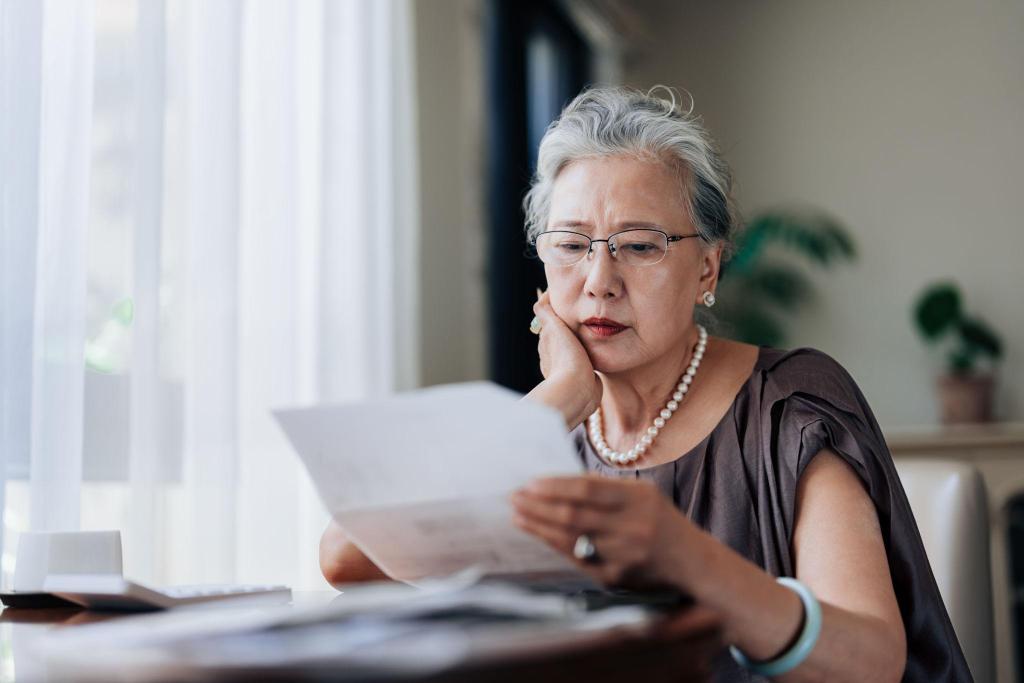
A caregiver, relative, or trusted friend may have access to more than an older person’s home. They may have access to an entire lifetime of savings, property, and family wealth. And sometimes, the greatest financial threat isn’t a stranger. It’s someone already inside the circle of trust.
In Chinese New York, where generations of families have built businesses, purchased homes, accumulated savings, and created inheritances, there is a financial risk that deserves far more attention.
It doesn’t always begin with a suspicious investment opportunity or a telephone call from someone pretending to be a government official.
Sometimes, it begins with a simple request.
Can you help me pay the bills?
Can you take care of my bank account?
Can you help me manage my property?
For an older adult who needs assistance, these arrangements can be entirely legitimate. A caregiver may become indispensable. A relative may take responsibility for financial paperwork. A trusted family friend may help communicate with banks and attorneys.
But when financial access becomes financial control, the consequences can be devastating.
This is known as elder financial exploitation, and one of its most difficult forms involves people the victim already knows and trusts.
The Person Closest to the Money May Be the Hardest to Question
New York State recognizes trusted-person financial exploitation involving adult children, relatives, friends, caregivers, and others who have established a position of trust with an older adult.
The exploitation can take several forms.
A caregiver who receives a bank card to purchase groceries may begin using it for personal expenses. A relative responsible for paying household bills may divert funds. Someone granted power of attorney may use that legal authority to benefit themselves.
In more serious situations, an older homeowner may be persuaded to sign documents transferring property ownership, changing beneficiaries, or modifying a will or trust.
The distinction matters.
A legitimate power of attorney is not evidence of wrongdoing. Nor is a caregiver’s access to a bank account inherently suspicious.
The issue is whether the authority is being used in the older adult’s interests or exploited for someone else’s benefit.
And that distinction can become difficult to establish when the person involved controls the paperwork, financial information, and communication with the outside world.
The Chinese New York Connection: When Family Relationships Complicate Disclosure
This issue deserves particular attention in Chinese-American communities, but not because Chinese families are inherently more vulnerable to abuse.
The more important question is whether language, social isolation, family dependence, and unfamiliarity with available support systems can make financial exploitation harder to recognize or report.
A 2025 peer-reviewed study published in the Journal of Immigrant and Minority Health examined 450 Chinese older adults in Chicago who had experienced elder mistreatment.
Among those participants, 134, or approximately 29.9 percent, experienced financial exploitation.
Approximately 31.8 percent did not seek help from any source. Only 3.34 percent sought help exclusively from formal resources such as professional services.
These findings deserve attention, but there is an important limitation: the research involved Chinese older adults in Chicago, not a representative sample of Chinese New Yorkers.
Nevertheless, the research offers insight into barriers that investigators should examine in New York.
The researchers discussed language barriers, limited awareness of formal services, social isolation, financial dependence, and concerns about damaging family relationships.
When the person suspected of exploitation is also a family member or someone connected to the victim’s community, seeking help can become emotionally complicated.
The older adult may fear losing a caregiver, damaging family relationships, or becoming isolated.
Sometimes, preserving family harmony can come at the expense of protecting individual financial interests.
That is not a criticism of Chinese culture. It is a reason to make confidential, culturally competent support more accessible.
Flushing Has Already Started the Conversation
This is not an entirely overlooked subject in Queens.
On June 15, 2026, the Chinese-American Planning Council’s Nan Shan Older Adult Center hosted a community panel in recognition of World Elder Abuse Awareness Day.
More than 70 older adults and a multidisciplinary panel of experts participated.
The discussion addressed financial exploitation, neglect, social isolation, and barriers to seeking help, including language barriers and cultural stigma affecting Asian-American older adults.
That gathering is significant because it demonstrates that elder financial protection is already part of the conversation among community organizations and older residents.
But awareness is only the beginning.
The larger question is whether older adults know how to recognize exploitation, whether families have independent financial safeguards, and whether victims can access assistance before their savings or property disappear.
The Financial Warning Signs Families Should Not Ignore
Financial exploitation can be difficult to recognize, particularly when the suspected person has legitimate responsibilities.
Some warning signs deserve attention:
- Unexplained withdrawals or transfers.
- Household bills remaining unpaid despite sufficient funds.
- Sudden changes in wills, trusts, insurance, or other financial documents.
- Unusual spending by someone with access to the older adult’s money.
- A new acquaintance claiming an entitlement to the older person’s assets.
- The older adult becoming excluded from conversations about their own finances.
- Pressure to sign documents or surrender financial authority.
- Unexplained changes in property ownership.
No individual warning sign proves financial abuse. Context and independent investigation matter.
There is another important consideration: financial exploitation can occur even when an older adult appears mentally capable and understands ordinary financial transactions.
The issue is not necessarily cognitive impairment.
It may simply be that someone has gained unauthorized control over the person’s money.
The City’s Responsibility: Who Protects the Vulnerable?
Financial exploitation is not exclusively a family problem. It also raises questions about institutional oversight.
On July 22, 2026, the New York State Comptroller released an audit examining how the New York City Department for the Aging oversees elder-abuse services.
The audit covered April 2019 through April 2025.
Among 41 sampled cases, auditors identified 17 in which referrals described high-risk circumstances, including physical violence or lack of access to food. The audit found that the department had not effectively monitored providers to ensure appropriate and timely services.
This audit does not establish that financial exploitation cases were mishandled in those 17 cases.
However, it raises a broader institutional concern: when an older adult needs protection, how quickly can the system respond?
For someone whose bank account is being drained or whose home is at risk of an unauthorized transfer, delays can have serious financial consequences.
How Families Can Protect a Lifetime of Wealth
The objective should not be to eliminate family assistance or make caregiving relationships adversarial.
It should be to establish accountability before a problem develops.
There are several practical safeguards worth considering.
Preserve independent financial visibility.
Older adults should retain access to their own bank statements, financial records, and account information whenever possible.
Establish independent oversight.
A separate trusted family member or qualified professional can periodically review financial transactions and identify unexplained activity.
Understand powers of attorney.
Giving someone legal authority over financial matters is a significant decision. Families should understand the document, its scope, and the responsibilities of the person appointed.
Protect real estate.
Property transfers, changes in ownership, and estate documents deserve independent legal review. A family home may represent the largest asset accumulated over several generations.
Preserve private communication.
Older adults should be able to speak independently with attorneys, financial institutions, healthcare professionals, and social-service providers.
New York State recommends independent review of financial statements, checking caregiver references, and obtaining a second opinion before changing powers of attorney, wills, or trusts.
Where Older Adults and Families Can Seek Help in New York City
People who suspect elder financial exploitation do not have to navigate the situation alone.
NYC Aging — Elder Abuse and Crime Support
212-244-6469
Referrals to elder justice services, counseling, crisis intervention, safety planning, and legal assistance.
NYC 311 — Report Suspected Elder Abuse
Call 311. Suspected abuse involving an older adult aged 60 or older can be reported. A person reporting on someone else’s behalf may remain anonymous.
Immediate Danger
Call 911.
New York State — Financial Exploitation Prevention
The Next Investigation: Is Chinese New York Adequately Protected?
There is a larger story here that deserves further reporting.
Queens should investigate whether Chinese-speaking older adults in Flushing, Elmhurst, and other New York neighborhoods have adequate access to financial protection services.
That investigation should examine whether banks provide accessible Chinese-language financial exploitation reporting, how financial institutions respond when caregivers or relatives make unusual transactions, whether older homeowners understand the legal consequences of powers of attorney and property transfers, and whether Chinese-speaking victims can access confidential legal assistance.
It should also examine whether community organizations have sufficient resources to identify and refer suspected abuse.
At present, the research reviewed for this article does not establish a specific financial-abuse rate for Chinese older adults in Queens. That is an important gap, not a reason to assume the problem does not exist.
Better local data would help policymakers and community organizations determine where additional protection is needed.
The Bottom Line
We often measure family wealth by the value of a home, the size of an investment portfolio, the success of a business, or the inheritance passed to the next generation.
But there is another measure of wealth preservation that receives far less attention.
Who has access to the money?
Who has the authority to make decisions?
And who independently verifies that those decisions are being made in the owner’s best interests?
For Chinese New York, this is an important conversation about aging, family responsibility, financial independence, and intergenerational wealth.
A caregiver should not have to be treated as a suspect. A family member should not automatically be viewed with suspicion. But neither should a relationship of trust become a license for unchecked financial control.
The most valuable inheritance is not simply the wealth we leave behind. It is the ability to protect the people who built it.
#FinancialAbuse #ElderFinancialAbuse #ElderAbuseAwareness #CaregiverAbuse #FinancialExploitation #ElderlyProtection #ChineseAmericanCommunity #ChineseNewYork #QueensNYC #FlushingNY #NewYorkCity #ProtectOurSeniors #ElderFinancialSecurity #TrustedPersonAbuse #WealthProtection


Leave a Reply